
Metabolic care for PMOS, formerly PCOS
Finally understand what's happening in your body.
A calmer way to understand PMOS — built around your hormones, your data, and your life.
Built with research fromESHREACOGPCOS UKEndocrine SocietyWHO
Most apps weren't built for PMOS.
They count calories. Punish missed days. Treat your symptoms like data points. And make you feel like you're failing — when really, you just haven't had the right information.
- “Just lose weight.”
- “Your labs look fine.”
- “It's just stress.”
Your body isn't broken. You haven't had the right tools.
PCOS is now PMOS.
In May 2026, 56 medical organisations renamed Polycystic Ovary Syndrome to Polyendocrine Metabolic Ovarian Syndrome. The diagnosis is the same. The science is finally clearer. And it's exactly the framing Gleam was built on.
More than one hormonal system. PMOS involves insulin, androgens, and the brain's endocrine signalling — not one organ acting alone.
Insulin resistance is at the core — for people with weight to lose, and for the ~20% with lean PMOS who were dismissed for years.
Cycles and follicles still matter. But what the old name called “cysts” were never really cysts — they're small, underdeveloped follicles.
A whole-body condition — not a reproductive footnote. Lifelong, manageable, and deserving of tools built for how it actually feels.
Source: Teede et al., The Lancet, May 2026. Endorsed by the Endocrine Society, Androgen Excess & PCOS Society, Verity UK, and 53 other organisations. ICD codes update in 2028 — until then, you'll see “PMOS (formerly PCOS)” almost everywhere.
Track. Understand. Feel better.
Three small habits, one clear understanding of your body. Built for the way PMOS actually feels — never how it's been measured.
Know what's connected.
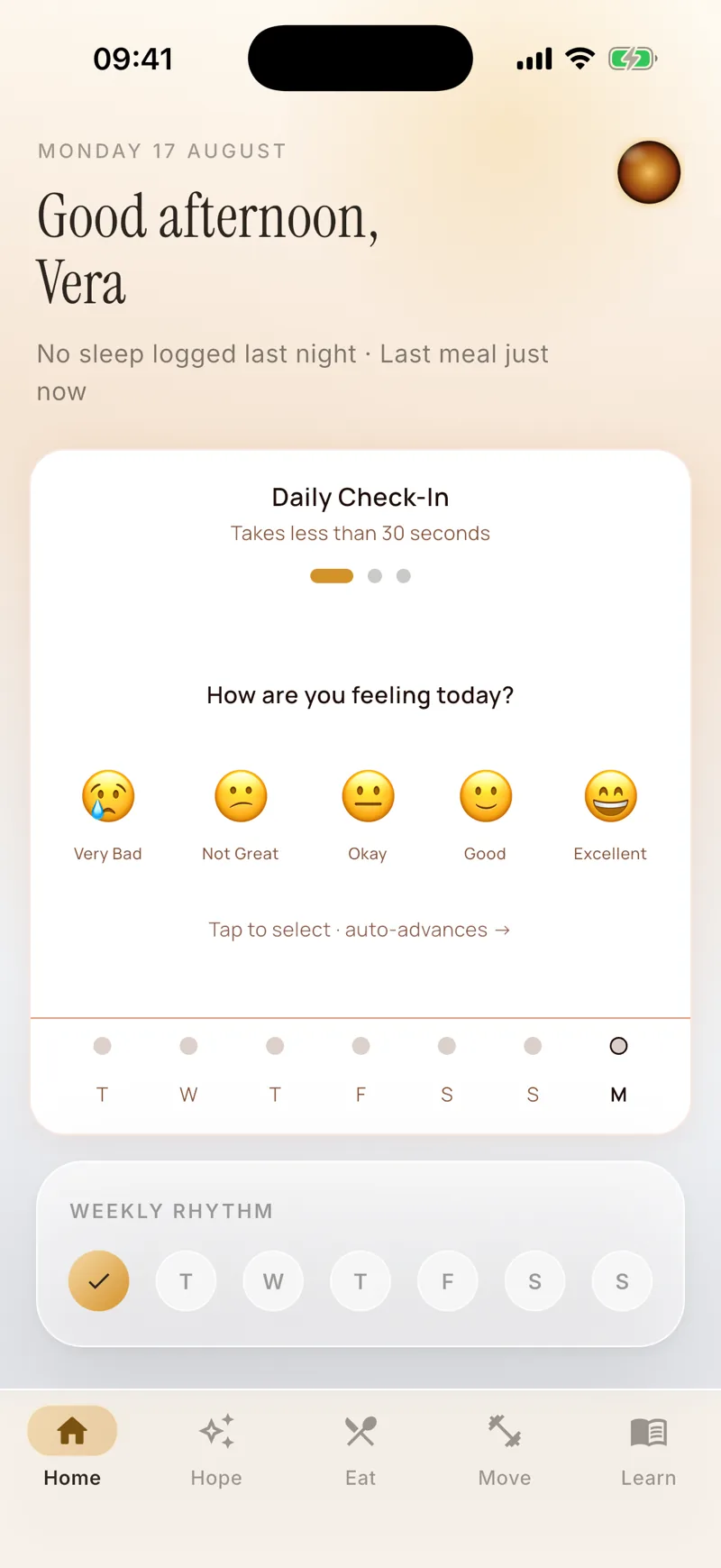
Log meals and daily check-ins in under 60 seconds. Gleam shows you what your food, sleep, and energy have in common — without turning you into a spreadsheet.
A coach who notices.
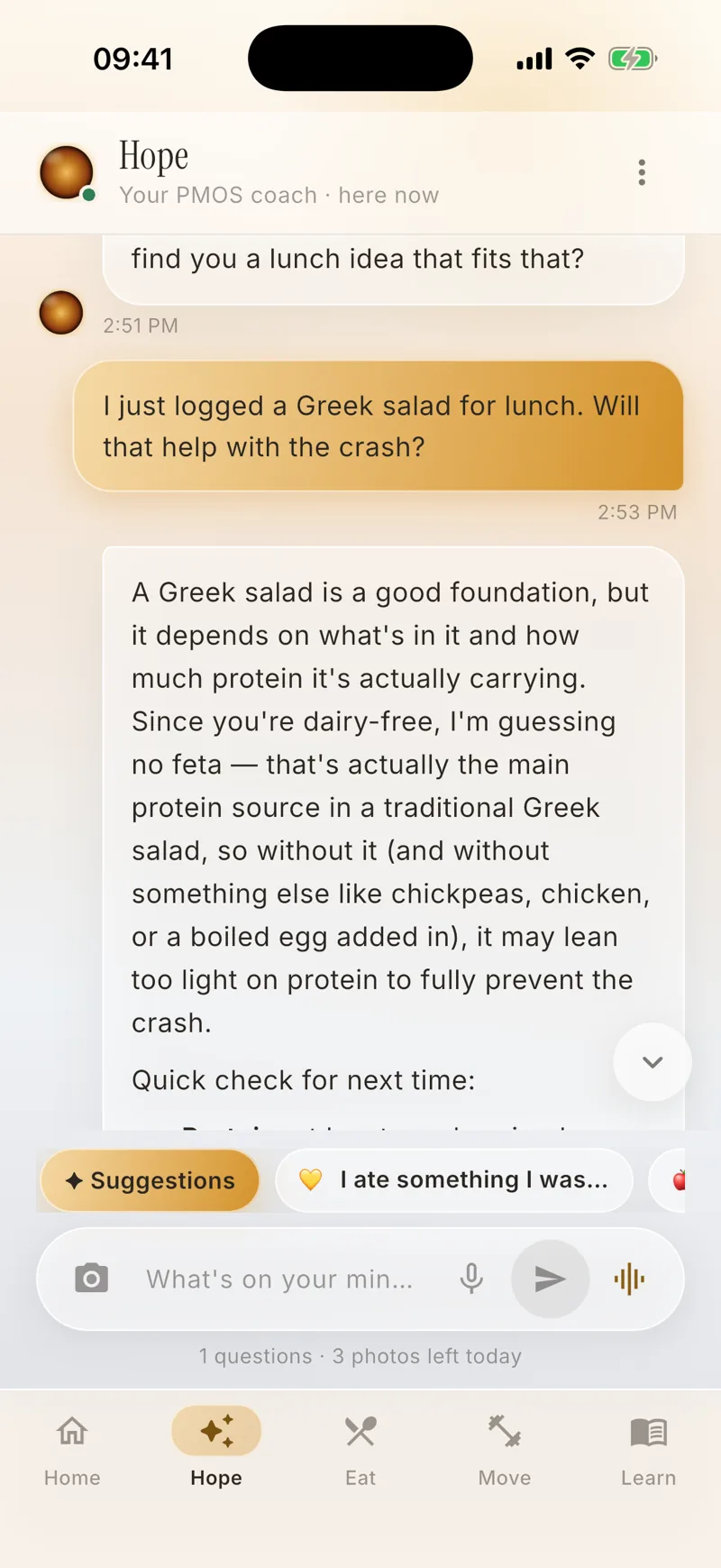
Hope is Gleam's AI wellness coach. She spots patterns in your data, shares what she's noticed, and helps you understand what's actually going on — in plain language, never clinical jargon.
Progress that shows up.
The Gleam Score rises when you show up — even inconsistently. It never drops as punishment. Because PMOS is a lifelong condition, not a 30-day challenge.
Meet Hope.
Hope is Gleam's named AI companion — built for PMOS, warm by design, and specific in a way generic AI assistants never are. She's not a chatbot. She's a coach who's been paying attention.
A score that can't break you.
Most apps punish missed days. The Gleam Score rises with momentum and never drops as a punishment. Skip a week? It's still here when you come back. Because real wellness doesn't run on streaks.
of women with PMOS are undiagnosed.
Gleam was built for the ones who finally have answers — and the ones still looking. Average diagnosis takes 2.5 years and 3+ providers. We're trying to make sure your own data isn't the last one to listen.
Everything you need. Nothing you don't.
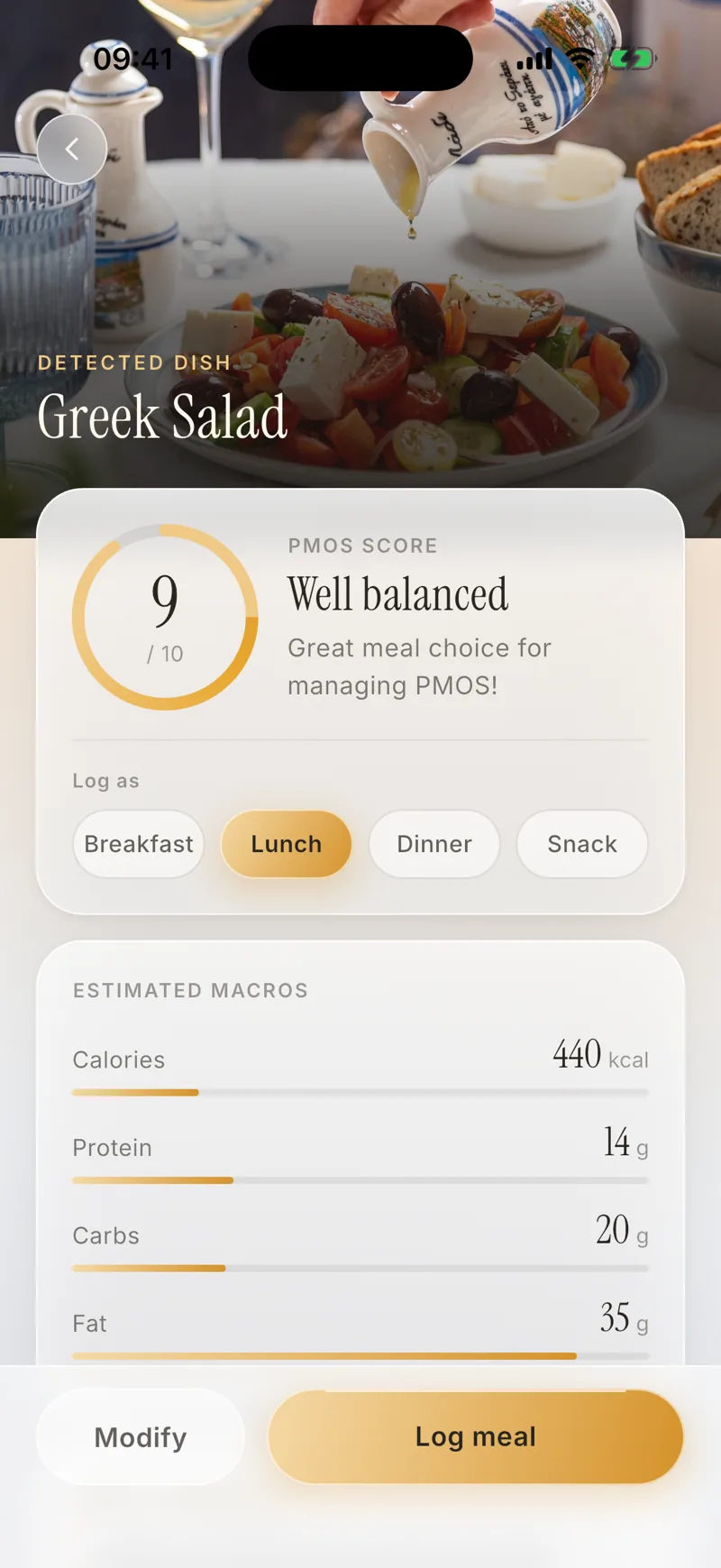
Sixty-second food log
Search, snap, or speak. No calorie obsession — just glycemic load, ingredient detail, and how you felt after.
Daily mood & symptom check-in
Mood, energy, bloating, sleep, cycle. 15 seconds a day. Hope uses every entry to spot patterns nobody else has bothered to look for.
Aha-engine insights
Personalised correlation cards. “Your fatigue often follows restless nights.” “Your energy is up on protein-rich mornings.” Yours. Specific. Not generic.
Movement, matched to your energy
Strength on high-energy days, gentle restorative work when you're depleted. Never punishment, never “calories burned.” Just what your body needs today.
Designed for PMOS, by women who've lived it.
Built by women with PMOS (formerly PCOS), for women with PMOS. Calm, warm, and made for how the condition actually feels — not how it's been measured.
Screen 2 of 3: Today
Gleam was the first app that didn't make me feel like my PMOS was something I had to fix.
Sofia, 28 · Early access tester
Things you might be wondering.
Know your body. Change your life.
Join the waitlist for early access to Gleam. The women who sign up now help shape what Gleam becomes.
No spam, everEarly access guaranteedNo ads — ever